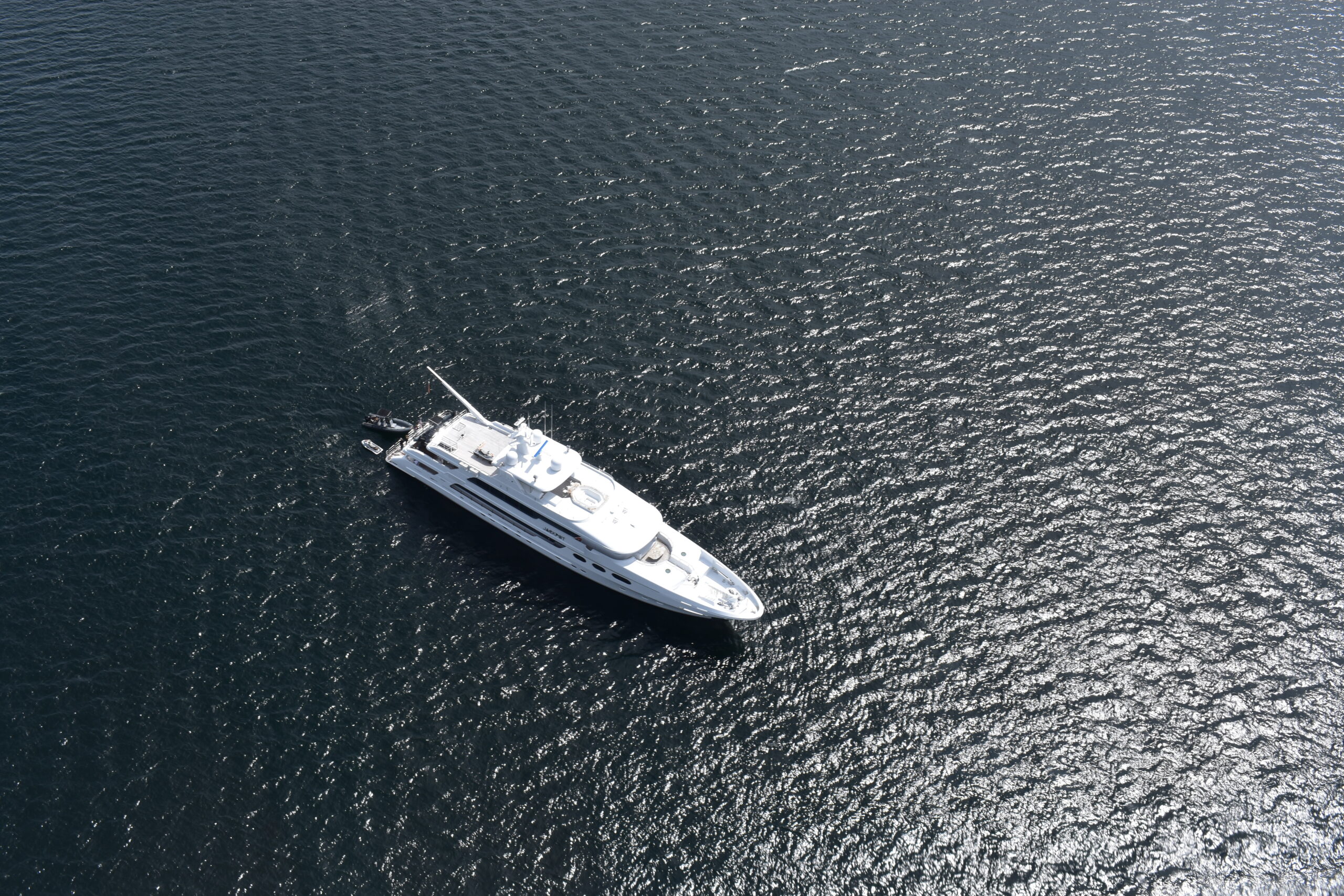
Life On Board During A Passage
Since starting my yachting career, I’ve covered over 6,000 nautical on the West Coast of the US, cruised throughout Florida, The Bahamas and partially up the East Coast. Here’s a little insight of what life on board during a passage is like.
Of course every boat is different. These are solely my experiences.
Gearing Up
Before a passage, crew need to prepare. Make sure all safety equipment are in working condition, stow valuables that might move around underway, provision the boat with enough food, water and toiletries to make for a comfortable passage and finally fuel up!
On Watch
Usually extended passages start as early as possible to get the most out of the day and get a jump on good sea conditions.

Some captains plot their passages on programs like TimeZero or Garmin navigation where they can utilize an auto pilot feature to either steer in the direction of a heading or on the course of a predetermined track. Other captains might hand steer if they know they will be going through congested areas or have to execute a lot of turns.
Regardless, while underway there should really (legally) be two people in the bridge at all times. This is called “watch”. You can guess what they’re doing. Usually one is the “officer of the watch”, or qualified captain/mate/driver you could say, while the other is the “lookout”.


Both parties are responsible for safely navigating the vessel during this time. Depending on how many crew members you have, your watch may be anywhere from 2 hours to 6 hours. I typically have been on boats with a 4 hour watch schedule. My shift being 12-4. Meaning twice a day, once at noon- 4pm and again at midnight to 4am, I was on watch. The time in-between that, I was off. Most likely sleeping, eating, relaxing, but sometimes also fishing.
During The Day
Of course, even underway there is plenty of work to be done: laundry, vacuuming, making meals, etc. If conditions are easy, you might even be asked to go outside and continue on with certain regular deck work. Some boats with large crews, work “normal days” underway if they’re not a part of the watch schedule. UGH.
However, I’ve been lucky. All of the boats I’ve worked on so far, my watch has been considered my time on the clock. Meaning any extra duties like laundry and cleaning could be done during my day watch hours. Thus, I didn’t have to do anything outside of my watch and could potentially get 8 hours of rest. T god.
Days are nice for seeing aquatic life. Dolphins, whales, fly fish and other boats make it a lot easier to stay alert and awake.


Into The Night
Night watches though are eerie. You’re surrounded by complete darkness. You might be able to see the waves beside you, but that’s all. You might pass a couple boat lights but that’s it. It really makes you realize how f*^ked you’d be if you somehow went overboard or an emergency happened. You feel completed isolated.
At the same time, it’s kinda freeing. You gain a certain removed perspective of the world while staring into nothingness for such long hours. ALSO THE STARS, UNREAL.

Braving The Elements
Depending on the conditions and your location your first passage is probably gonna literally blow chunks. Or at least that’s how mine went. I had done plenty of cruises, boat excursions and recreational boating but being in the open ocean, especially the West Coast, was a completely different beast.

I’d love to tell you most of the time they’re really calm and smooth rides, but I’d be TOTALLY LYING! If you are not sitting down you are usually trying to move your body with the boat. Timing your steps with the swells, holding onto any wall or railing close by. Honestly, it’s a great workout.
Really it just takes some time to get your sea legs that’s all. You get used to it. Those were typically my experiences while on the West Coast. So far the East Coast has been much more forgiving. Plus, having the Intercostal Waterway or ICW to use as an alternative route up or down the East Coast to protect you from weather and waves makes for smooth sailing.
If you’d like to see some of the conditions we braved on the West Coast last year, check it out here on my TikTok. Thank you all for reading and let me know if you have any questions!!
2 responses to “Life On board During a passage”
-
I love reading about your experience Halley- It’s fascinating! I will subscribe to your blog going forward!
-
Thank you so much! So good to hear from you! I’m still working out some email subscription kinks, but should be sending consistent emails very soon!
-


Leave a Reply