
Ahoy esteemed colleagues. We are gathered here today to help you write an outstanding CV to nail your first yacht job. Though before jumping the gun, it’s wise to make sure yachting is for you. Check out what to expect when living on a boat, a typical day on a yacht and how to get started to learn more about the life of a Yachtie.
First of all, in yachting we don’t deal with anything as basic as a resume. No. Instead, you are writing a cirricullum vitae aka CV, aka latin for “course of life”. A CV not only outlines your work experience, but also outlines you as a person. Thus, CV’s can be more extensive and descriptive than a regular resume.
Formatting
In my opinion, the most important part of a CV is the outline. CV’s contain a lot of information, so you want to make sure all of that info is clear, concise and easy for the reader.
I recommend using Canva to create your outline. Not only is it a free and easy resource, but it also offers a wide variety of different customization options.
A yachting CV should contain these components:
- Summary
- Work Experience
- Skills
- References & Contact Info
- Volunteer Work
- Certifications
- Desired Positions
- Contact Info
- Passort Nationality
- Visas
- Driver’s License
- Spoken Languages
- Tattoo Visibility
- Smoking Status
- Vaccination Status
- Birthday/Age
- Current Location
It is a lot of information! So again, it is very important to keep it organized. Create different sections for experience, volunteer work, references, certificates, etc. Whatever makes the most sense for you. Along with organization, make sure everything within your categories are sorted by date or importance.
Summary
Let’s begin with your summary. The summary should be a brief intro of yourself, what you are looking for, your aspirations in the industry and what skills you bring to the table. Be clear on what you are looking for. Use the template…
I am looking for (commitment type) work on a (Private/Charter) yacht as a (desired position(s)).
Newbies you should add where your passion to yacht came from and what transferable qualities/skills you possess that make you a competitive candidate. Similarly, experienced crew add just that: you’re experienced.
Keep this whole section between 3-5 sentences long. Surprisingly, people actually read these so make sure you proofread before finalizing.
Subsequently, add your experience section. Include all relative jobs, their timelines, the company, your position and short description of your responsibilities. Feel free to take a look at these resumes as example.
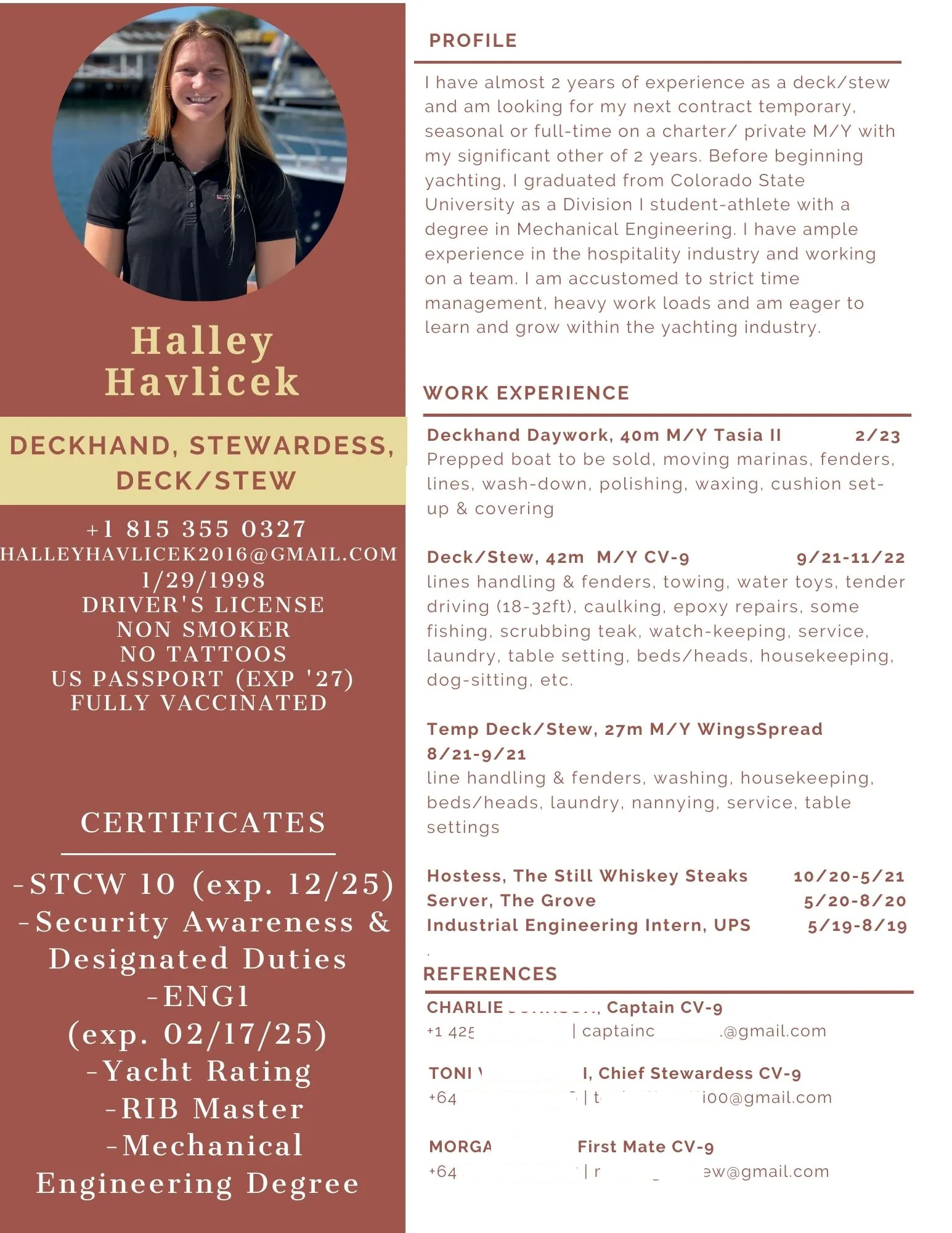

If your most recent or important jobs still may seem to fall short of the *yachting standard* then add a skills section.
Specifically if you’re new to yachting, highlight your previous experience of transferable skills. Any hospitality skill are a great benefit to all position. If you are looking to become a deckhand maybe add a skills section of any fishing, water sports, diving, water toys or recreational boating experience. Same goes for engineer: bike mechanic, wood working, car maintenance. Stewardess: hostess, waitress, server, bartender, nanny, etc. You get the point.
Information To Include
Another specific yachting CV component, is your personal information. Make sure to put your email and phone number WITH YOUR COUNTRY CODE at the top of your personal information. You do want people to contact you right? If you don’t already have one, DOWNLOAD WHATSAPP. It is a messenger app that uses wifi to communicate internationally. More importantly, used by everyone in the yachting industry! In addition, maybe make a new professional email instead of putting soccerstarhalley@aol.com on there… just for example. You can also include your current location, availability (ex: can work ASAP, 1-2 weeks notice) and job type (temp, perm, seasonal) as well.
*PLEASE, DO NOT PUT YOUR PASSPORT NUMBER ON YOUR CV, just your expiration year and issuing country. *
Moving onto the reference section, you should have at least 3 reliable references with an email and or phone number on your CV. Having a head of department or Captain definitely looks great, though references can also be previous employers, counselors, close family friends or even other crew members. I recommend before putting someone on you CV, reach out and let them know. Then, you can even ask for a recommendation letter. A lot of employers want to see recommendation letters. Also, that way they are less likely to actually reach out to references and instead just read what they have written.
Next section should be for certifications and achievements. Any transferable achievements completed should be documented here. Of course list your STCW, ENG1 and any other certifications you’ve earned for the minimum qualifications of your position. Other high in demand certifications include: scuba diving, masseuse, videographer, kite surfing instructor, personal trainer, college degrees, beverage courses and more. Employers will ask for the physical certificate later on, but until then it is unnecessary to include in your CV.
Headshot
Ahh now finally onto your CV picture. It is very important to get a good CV picture because this industry is based on looks professionalism. Get a decent camera, polo, nice background and go out NOT AROUND 11-3. Trust me you will be blinded by the light and your pictures will all be squinty. Do not wear sunglasses in your photo. Shoot from the chest up. Take multiple!
How To Stand Out From The Rest
Lastly, I listed a couple other CV hacks to help make your CV stand out compared to others.
- Do not make your color scheme CV blue. AH IK, WE WORK ON THE WATER. Well when everyone’s CVs are blue and yours is not, people are more likely to remember yours! Still pick an appropriate and professional color. Obviously.
- Make sure your name and position are BOLD & very close to your picture. Again psychology, hopefully whoever has taken a few minutes to look at your CV and in the future can associate your name with your picture and vice versa.
- Update! Update! Update! Whenever you find any job, especially daywork, update that CV. Even just a few days of daywork can make a real difference to employers. Make sure to delete old CV’s so you don’t accidentally send an old one.
- Make sure to save you CV as various file types it make it quicker to send/apply depending on what they are asking for.
Finally, if you have a newly created CV and would like a peer edit please feel free to email theplankrunner@gmail.com! Check out my article on How to Land Your First Yacht Job where I include a list of agencies, websites and hacks to jump start your yacht career!

Leave a Reply